1. Core Functions of a Coating Machine
A coating machine is a highly efficient surface treatment equipment designed specifically for the confectionery and food industries. Through continuous tumbling in the coating pan, syrup or coating solution is added via a spray gun, while hot air is continuously blown in to rapidly dry the solution. This process builds up a uniform, glossy, and durable coating layer. This layer not only gives the product an attractive shine and vibrant color but also acts as a protective barrier against moisture, light, and air, thereby extending shelf life. Furthermore, different coating materials allow for diverse processes like multi-layer sugar coating and polishing, making it key to enhancing product quality and commercial value.
2. Applicable Product Range
Confectionery coating machines have a wide range of applications, covering everything from classic snacks to functional foods. Specific scenarios include:
Chewing Gum & Bubble Gum: Whether traditional or xylitol bubble gum, the crisp and shiny sugar shell relies on the coating machine. By precisely controlling the syrup ratio and temperature, the equipment creates a perfect brittle texture and supports coating and polishing for various shapes like spheres, ovals, and pillows.
Chocolate Beans & Sugar-Coated Chocolates: This is a classic application. Multi-layer sugar coating and polishing not only provide vibrant colors and a mirror-like gloss but also form a sturdy moisture-proof layer, effectively preventing the chocolate from melting or sticking during storage.
Compressed Candies: Such as mints, throat lozenges, and milk tablets. Note that not all compressed candies require coating (e.g., basic solid plain tablets do not). However, when these candies are prone to moisture absorption, have off-flavors, or need extended shelf life, coating becomes crucial. It effectively isolates air and moisture, prevents sticking, improves mouthfeel, and boosts overall commercial value.
3. Components and Their Functions
A standard coating machine consists of multiple core systems working together to complete the coating, drying, and polishing processes. Understanding these components helps you select the right equipment and optimize production:
Main Unit & Coating Pan: The main body includes the host and air blower. The pan is made of 304 stainless steel, meeting GMP standards. During operation, the smooth rolling ensures even tumbling and uniform adhesion of the coating solution. The pan's volume determines the single-batch output, allowing users to choose the right model based on production scale.
Spray System: Composed of spray guns, liquid delivery pumps, and mixing tanks. It atomizes the coating solution and evenly sprays it onto the moving product surface. The angle and atomization effect of the spray gun determine the coating uniformity.
Hot Air Circulation System: Includes heating devices, fans, and filters. It delivers filtered clean hot air into the drum to quickly dry the solvent on the product surface, preventing particles from sticking together.
Control System: Typically a PLC touch screen used to set and monitor key process parameters such as rotation speed, temperature, and spray rate.
4. Capacity Comparison and Selection Guide for Different Sizes (Zhonghong Models)
Choosing the right size is key to ensuring production efficiency and cost control. The table below compares the capacities of common lab and production models to guide your selection:
| Equipment Category | Model Examples | Pan Diameter | Pan Thickness | Batch Capacity (kg/batch) | Pan Rotation Speed (r/min) | Machine Weight (kg) |
|---|---|---|---|---|---|---|
| Lab & Pilot‑scale Type | BYJ‑300 / BYJ‑400 / BYJ‑600 | 300 / 400 / 600 mm | 2 mm (SUS‑304) | 0‑4 / 4‑10 / 10‑15 | 0‑40 (adjustable) | 60‑80 |
| Small‑scale Production Type | BYJ‑800 / BYJ‑1000 | 800 / 1000 mm | 2 mm (SUS‑304) | 20‑50 / 50‑70 | 0‑32 (adjustable) | 220‑260 |
| Large‑scale Production Type | BYJ‑1250 / BYJ‑1500 / BYJ‑2000 | 1250 / 1500 / 2000 mm | 3‑4 mm (SUS‑304) | 70‑100 / 100‑160 / 160‑250 | 0‑28 (adjustable) | 300‑1500 |
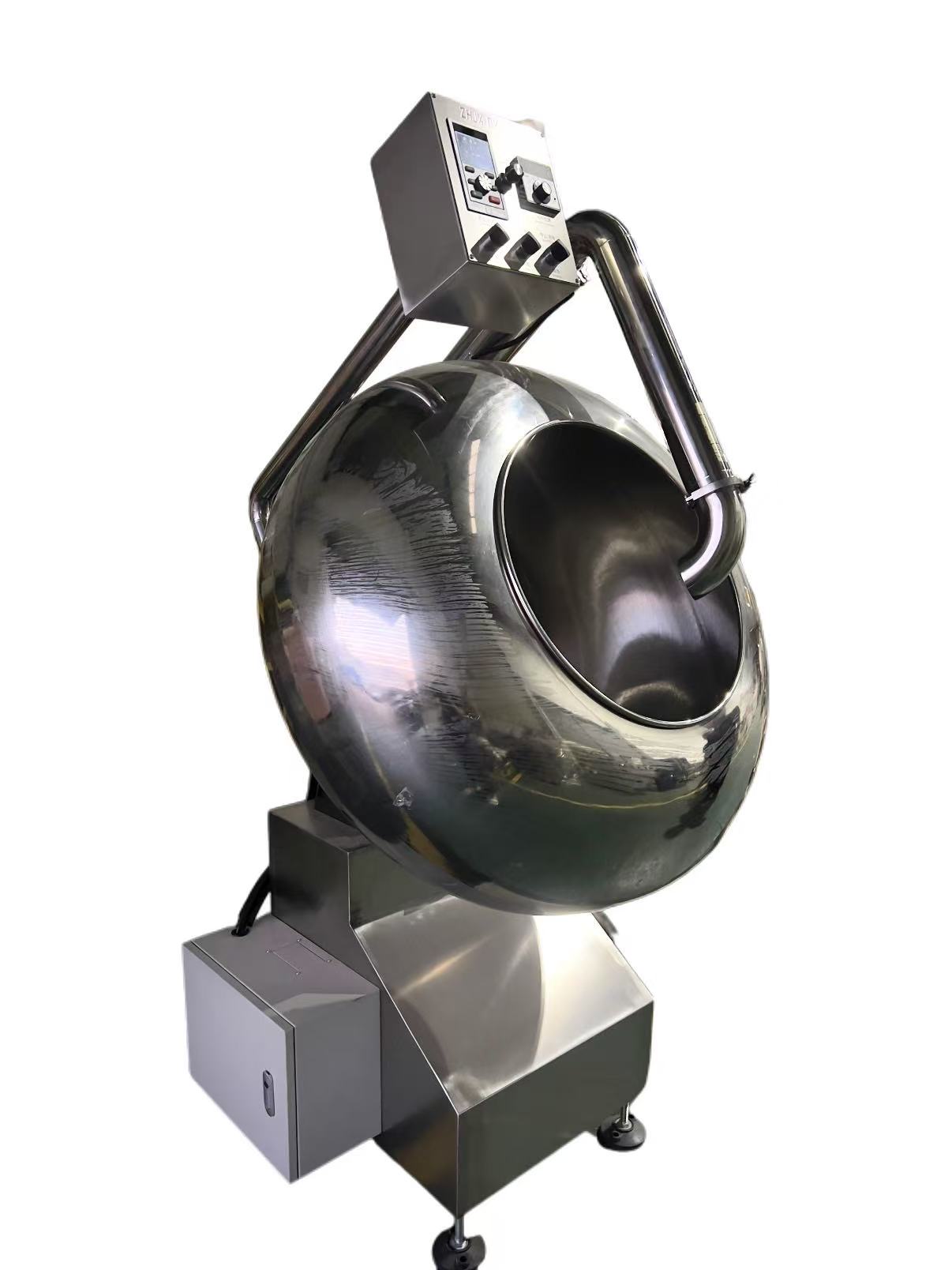
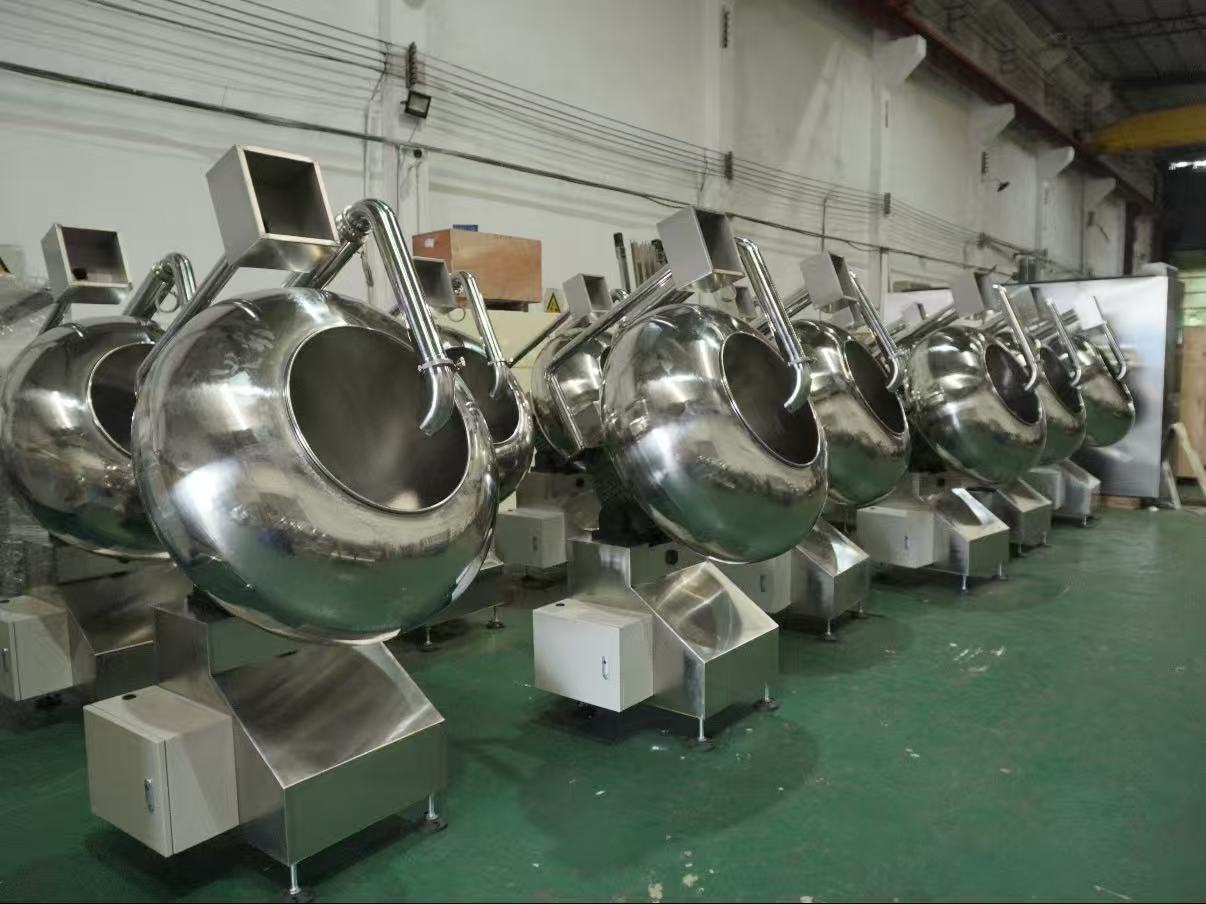
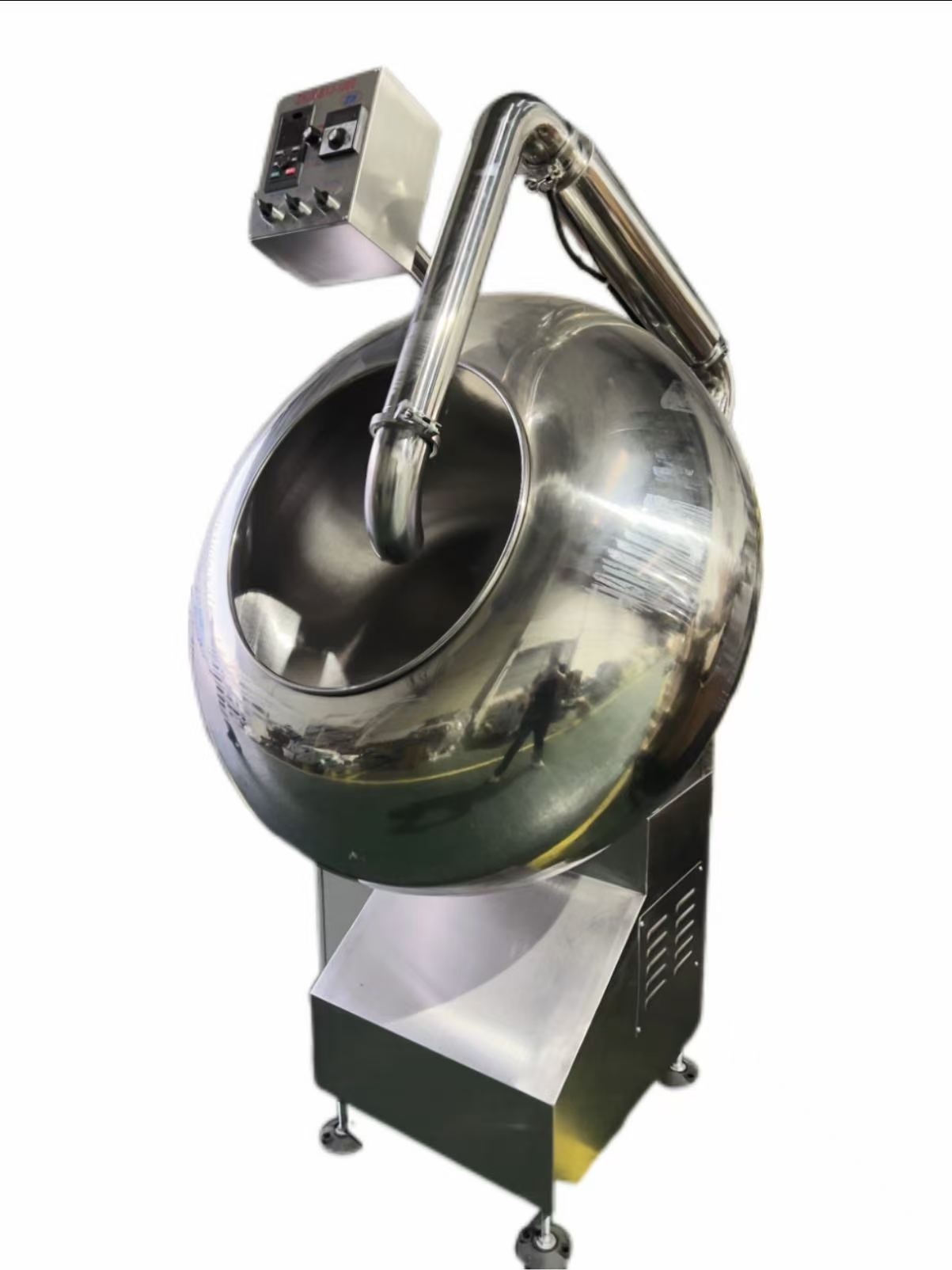
Lab & Pilot Scale (BY-300/BY-400/BY-600): Pan diameter 300-600mm, capacity 0-15kg/batch, speed 0-40 r/min.
Small Production Scale (BY-800/BY-1000): Pan diameter 800-1000mm, capacity 20-70kg/batch, speed 0-32 r/min.
Large Production Scale (BY-1250/BY-1500/BY-2000): Pan diameter 1250-2000mm, capacity 70-250kg/batch, speed 0-28 r/min.
Application Scenarios & Selection Advice:
Lab & Pilot Scale: Ideal for R&D formulation, laboratories, small-scale customization, pre-launch trials, and small-batch multi-product production. It allows R&D departments to repeatedly debug formulas with minimal material loss and provides reliable data for scale-up. It's also suitable for startups to test market acceptance with lower investment. Note: Capacity is limited; upgrade to production models once orders stabilize.
Small Production Scale: The mainstay for small-to-medium confectionery enterprises. Suitable for businesses with stable sales channels, relatively fixed product varieties, or new factories aiming for controlled initial investment while maintaining commercial quality standards. Ensure factory power supply meets full-load requirements.
Large Production Scale: Designed for large-scale industrial production in major confectionery factories. Features excellent continuous operation capability, high automation, and large pan volume to ensure consistency across batches. It is the ultimate equipment for modern enterprises to upgrade capacity and achieve standardized production.
5. Conclusion
From lab formulation and pilot-scale validation to large-scale mass production, matching the equipment to your current development stage is the optimal solution. We hope this guide helps you make a wise decision.
If you have further questions or need process evaluation for specific products, feel free to contact us. We will provide professional equipment selection advice and technical support based on your capacity needs, factory conditions, and product characteristics, helping your confectionery production reach new heights of efficiency and stability.